
Heat pump hot water systems NZ: Models, types and how to choose?

Updated: Apr 1
Choosing the right heat pump hot water system
Choosing the right heat pump hot water system can make a big difference to your home’s energy efficiency, hot water performance, and long-term power costs. For many Kiwi households, upgrading to a heat pump system is a smart investment that saves money and reduces environmental impact.
With many models and types available, the choice can be overwhelming.
At Calitec, we know every home is different. That’s why we focus on helping New Zealanders choose the right heat pump hot water system for their home, lifestyle, and climate. This guide explains briefly the main system types, their benefits, and key considerations so you can make an informed decision for your home.
All-in-one option:
All-in-one systems combine the cylinder and heat pump in a single unit with the heat pump mounted on top. They are straightforward to install and work well for many homes. While they are compact and convenient, these systems often have limited heating power, which may lead to longer recovery times, especially during winter when ambient temperatures drop.
Benefits:
Compact and space-saving
Lower installation complexity
Simple maintenance
Things to consider:
Heating capacity - What is the output? Can it reheat water quickly in cold weather?
Water temperature - Does it reach 60°C without electric boost?
Replacement - If the heat pump fails, does the entire system need to be replaced?
Warranty - Does it cover long-term performance and a good return on investment
Split systems options:
In a split system, the heat pump and hot water cylinder are installed as two separate units, offering more flexibility. There are two main types of split systems:
Refrigerant-based split systems – Use the refrigerant to transfer heat directly to the cylinder. These systems tend to be more efficient and allow greater flexibility in placement, especially for larger homes.
Water-based split systems (also called mono-block systems) – Use heated water circulated between the outdoor heat pump unit and an indoor or outdoor hot water cylinder. These systems are often simpler to install but can have slightly heat loss over long pipe runs.
1) Refrigerant cycling split system
Refrigerant cycling split systems have an outdoor heat pump unit connected to a hot water cylinder via refrigerant pipes. It heats the water inside the cylinder. This design offers high efficiency with minimal heat loss and installation flexibility, making them ideal for many Kiwi homes.
Benefits:
Flexible cylinder placement indoors or outdoors
The outdoor unit can be positioned out of sight.
If the heat pump unit reaches the end of its life, it can be replaced separately.
Things to consider:
Slightly higher installation costs as a qualified heat pump installer is required to connect the refrigerant pipes.
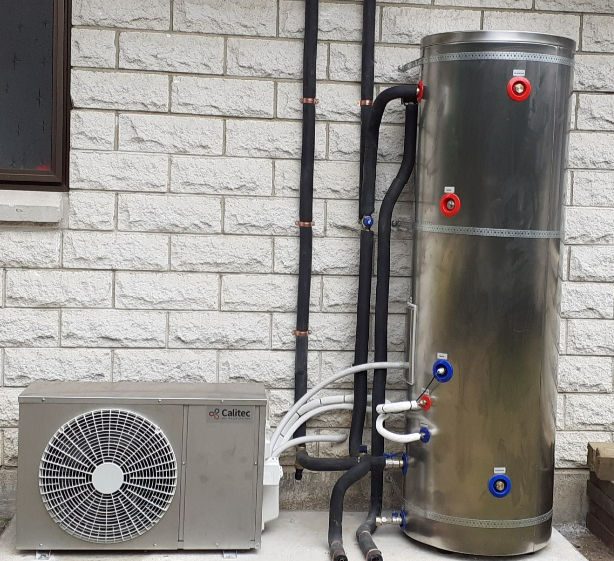
2) Water circulation systems (mono block):
Traditional Mono-Block Systems
Older mono-block systems often used refrigerants limited to 55°C, requiring electric heaters to meet the 60°C safety standard. These systems also had restrictions on pipe length due to heat loss.
R290 Mono-Block Systems
With advancements in refrigerants like R290, many issues with older systems have been resolved. R290 systems can heat water up to maximum 70°C, eliminating the need for electric boosting. They also overcome pipe length limitations, offering more installation flexibility, making them ideal for Kiwi homes.
CO₂ Mono-Block Systems
These operate at high pressures and deliver good performance but can be more expensive.
Key questions to ask:
Can the system heat water without requiring an electric boost?
How does the system's performance vary with ambient temperatures?
How does performance change in colder weather?
Making your decision
At Calitec, we work closely with homeowners to match systems to their needs. Factors like household size, climate, and installation preferences all matter.
Our key solutions:
WH-70 Mono-Block Heat Pump Water Heater - uses R290 refrigerant for high efficiency and durability, designed for New Zealand conditions.
KP-50 Refrigerant Cycling System - flexible installation with great performance for larger households.
Both are made of stainless steel and designed with energy efficiency, long life, and sustainability in mind, helping Kiwi households cut power bills and reduce emissions.
For further reading, check out these independent resources:


Comments